
How to Calculate CBM for Shipping: Formula, Examples & Container Limits
Free Calculator
CBM Calculator
Table of Contents
CBM (cubic metre) = Length × Width × Height in metres. Measuring in centimetres? Divide the result by 1,000,000. For multiple identical cartons, multiply by the carton count. A 20ft container holds 33.2 CBM, a 40ft holds 67.7 CBM, and a 40ft High Cube holds 76.3 CBM. Skip the manual math with our free CBM calculator — it handles unit conversion, multiple box types, and container fit automatically.
Every sea freight quote, LCL invoice, and container booking starts with one number: your shipment's total cubic metres. Get it wrong by even half a CBM and you either overpay for space you don't use or get hit with adjustment charges at destination. This guide covers the exact calculation freight forwarders use, with worked examples for every unit system.
What Is CBM in Shipping?
CBM stands for cubic metre (m³) — the volume of a cube measuring 1 m × 1 m × 1 m. It is the universal unit of volume in international logistics: ocean carriers price LCL (less-than-container-load) cargo per CBM, forwarders quote container utilisation in CBM, and customs documents record shipment volume in CBM.
CBM measures space, not weight. Carriers care about both — a container runs out of space (CBM) or payload (kg), whichever comes first. That's why quotes often reference "1 CBM = 1,000 kg" for sea freight; more on that in our guide to volumetric weight and chargeable weight.
The CBM Formula
For a single box or crate:
CBM = Length (m) × Width (m) × Height (m)
Most cartons are measured in centimetres, so the practical version is:
CBM = (L cm × W cm × H cm) ÷ 1,000,000
| Your measurement unit | Formula | Example (60 × 45 × 40) |
|---|---|---|
| Metres | L × W × H | 0.6 × 0.45 × 0.4 = 0.108 CBM |
| Centimetres | (L × W × H) ÷ 1,000,000 | 108,000 ÷ 1,000,000 = 0.108 CBM |
| Inches | (L × W × H) ÷ 61,023.7 | 23.6 × 17.7 × 15.7 ÷ 61,023.7 = 0.107 CBM |
| Feet | (L × W × H) ÷ 35.315 | 1.97 × 1.48 × 1.31 ÷ 35.315 = 0.108 CBM |
Working with mixed metric and imperial dimensions from different suppliers? Convert everything to one system first with our cm to feet converter or general unit converter, or let the CBM calculator for shipping switch units for you.
Worked Example: A Real Import Shipment
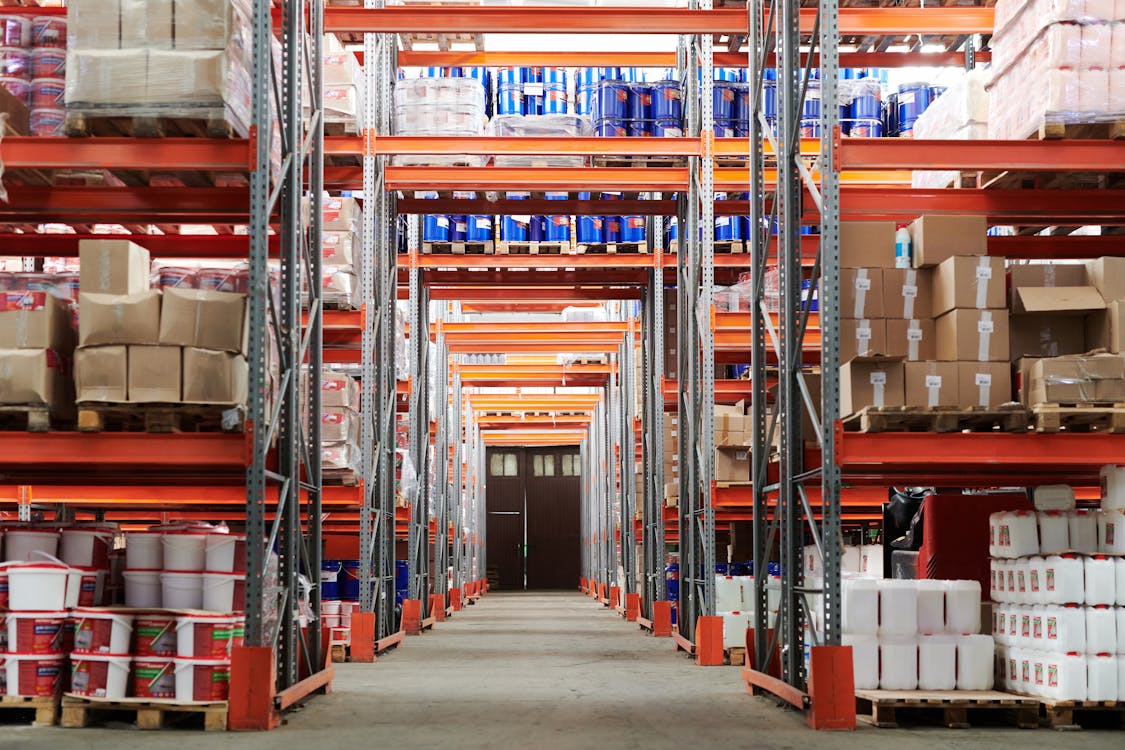
Suppose you're importing 120 cartons of kitchenware from Guangzhou, each carton 55 cm × 40 cm × 35 cm:
- Single carton: 55 × 40 × 35 = 77,000 cm³
- Convert: 77,000 ÷ 1,000,000 = 0.077 CBM per carton
- Total: 0.077 × 120 = 9.24 CBM
At 9.24 CBM this shipment ships LCL (per-CBM pricing) rather than a full container — see our breakdown of the LCL vs FCL decision and the 15 CBM breakeven rule for why.
Calculating CBM for Multiple Box Sizes
Real shipments rarely have one carton size. Calculate each line separately and sum:
| Item | Dimensions (cm) | Qty | CBM each | Line CBM |
|---|---|---|---|---|
| Dinner sets | 55 × 40 × 35 | 120 | 0.077 | 9.24 |
| Cutlery boxes | 30 × 25 × 20 | 80 | 0.015 | 1.20 |
| Display stands | 120 × 60 × 15 | 10 | 0.108 | 1.08 |
| Total shipment volume | 11.52 CBM | |||
The free CBM calculator supports multiple box types in one calculation and shows a live 3D preview of how the cargo fills each container size. For a full packing plan with weight distribution, pair it with the container load calculator.
How Many CBM Fit in Each Container?
| Container | Internal dimensions (m) | Max capacity | Realistic usable | Max payload |
|---|---|---|---|---|
| 20ft standard | 5.90 × 2.35 × 2.39 | 33.2 CBM | 26–28 CBM | 28,180 kg |
| 40ft standard | 12.03 × 2.35 × 2.39 | 67.7 CBM | 55–58 CBM | 26,600 kg |
| 40ft High Cube | 12.03 × 2.35 × 2.70 | 76.3 CBM | 62–68 CBM | 26,460 kg |
| 45ft High Cube | 13.55 × 2.35 × 2.70 | 86.0 CBM | 72–78 CBM | 25,600 kg |
Note the gap between theoretical and usable capacity: irregular carton sizes, pallets, and loading clearance mean you typically fill 80–85% of the rated CBM. Full details in our container capacity guide.
CBM Mistakes That Cost Real Money
- Measuring inner instead of outer dimensions. Carriers bill on outer carton dimensions, including bulges and pallet overhang.
- Ignoring the pallet. A standard EUR pallet adds 14.4 cm of height and its footprint (1.2 × 0.8 m) defines the billable base even if cartons don't cover it fully.
- Rounding down. Most LCL tariffs round up to the next 0.5 or 1.0 CBM. 9.24 CBM may be billed as 9.5 or 10.
- Forgetting the weight check. Dense cargo (tiles, hardware, liquids) hits the container's payload limit long before its CBM limit — verify with a shipping weight calculator.
Measure three cartons from different pallets, not the sample your supplier photographed. Production cartons routinely run 1–2 cm larger than spec once tape, strapping, and bulge are included — across 120 cartons that's an extra 0.5–1 CBM you'll be billed for at destination if you declared the spec-sheet number.
- CBM = L × W × H in metres; from centimetres divide by 1,000,000
- Multiply per-carton CBM by quantity, and sum every carton size separately
- Carriers bill on outer dimensions at the widest points — pallet included
- 20ft ≈ 33.2 CBM, 40ft ≈ 67.7 CBM, 40HC ≈ 76.3 CBM rated (expect 80–85% usable)
- Most LCL tariffs round up to the next 0.5 CBM and re-measure at the warehouse
Frequently Asked Questions
How do I calculate CBM from centimetres?
Multiply length × width × height in cm, then divide by 1,000,000. Example: a 50 × 40 × 30 cm carton is 60,000 cm³ = 0.06 CBM.
What does 1 CBM mean in kg?
Nothing directly — CBM is volume, kg is weight. But sea LCL pricing uses the convention 1 CBM = 1,000 kg to decide chargeable weight: you pay on whichever is greater. Air freight uses 1 CBM ≈ 167 kg (divisor 6,000). See our volumetric weight guide.
How many CBM is a standard pallet?
A EUR pallet loaded to 1.5 m height is 1.2 × 0.8 × 1.5 = 1.44 CBM. A US 48×40 inch pallet loaded to 60 inches is roughly 1.7 CBM.
Is CBM calculated on actual or rounded dimensions?
Carriers measure to the nearest centimetre on the longest points of each side — a bulging carton is measured at the bulge. Freight forwarders' warehouse re-measurements override your declared figures.
What's the fastest way to calculate CBM for many boxes?
Use an online CBM calculator with multiple box support — enter each carton type once with its quantity, and read total CBM, volumetric weight, and container fit in one pass.
Related Calculators
Try these free calculators related to this article:
In-Depth Guides
Dive deeper with our comprehensive guides on this topic:
Frequently Asked Questions
Our Methodology
All cbm content on CalculatorApp.me is reviewed by subject-matter experts, cross-referenced with official sources, and updated regularly for accuracy. Our formulas and data are verified against industry standards and government publications.
Jordan Hayes
Verified AuthorPersonal Finance Content Strategist
Jordan is a personal finance content strategist with 9+ years writing about mortgages, retirement, tax strategy, and budgeting. Every guide is cross-referenced with IRS publications, Federal Reserve data, and CFPB guidance to make complex calculations accessible. Editor at CalculatorApp.me.
Found this helpful? Share it!
Stay Updated
Get notified when we launch new calculators and features.
No spam. Unsubscribe anytime.