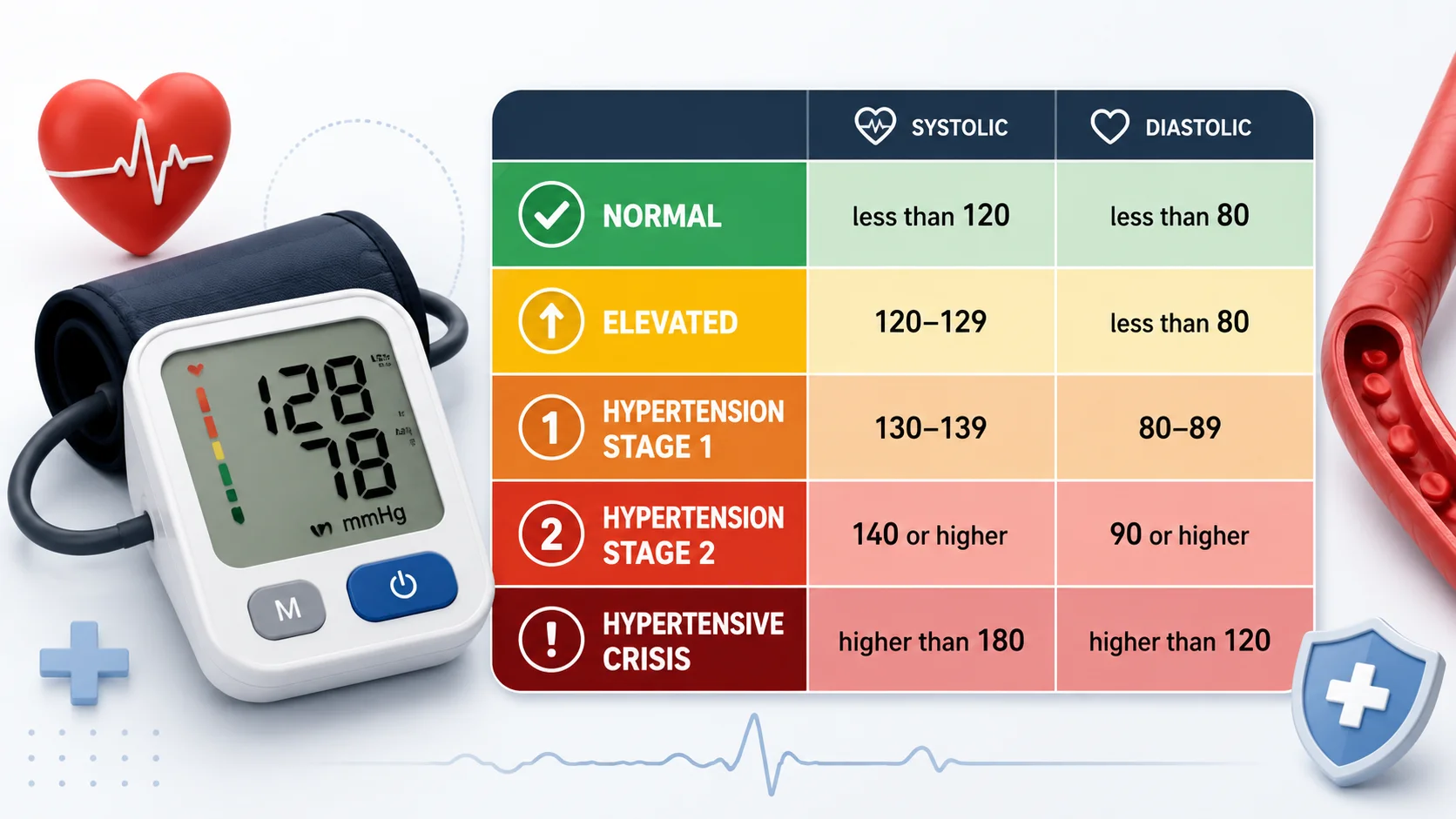
Blood Pressure Ranges Chart: Normal, Elevated, and Hypertension Stages Explained
Free Calculator
BMI Calculator
Table of Contents
Understanding Your Blood Pressure Ranges Chart
A blood pressure reading consists of two numbers: systolic over diastolic (e.g., 120/80 mmHg, read as "120 over 80").
- Systolic (top number): The pressure in your arteries when your heart beats (contracts and pumps blood).
- Diastolic (bottom number): The pressure in your arteries when your heart rests between beats.
Both numbers matter, but systolic pressure is a more significant risk factor for cardiovascular disease in adults over 50, according to the American Heart Association.
Blood Pressure Categories (AHA/ACC Guidelines)
The 2017 AHA/ACC guidelines define five blood pressure categories:
1. Normal: Below 120/80 mmHg
Both systolic below 120 AND diastolic below 80. No medication needed. Maintain through healthy lifestyle habits.
2. Elevated: 120-129 / Below 80 mmHg
Systolic between 120-129 AND diastolic below 80. Not yet hypertension, but a warning sign. Without lifestyle changes, likely to progress to Stage 1 within 4 years.
3. Hypertension Stage 1: 130-139 / 80-89 mmHg
Systolic 130-139 OR diastolic 80-89. Doctor may prescribe lifestyle modifications and potentially medication if cardiovascular risk is high (10-year ASCVD risk ≥10%).
4. Hypertension Stage 2: 140+ / 90+ mmHg
Systolic 140+ OR diastolic 90+. Medication is typically prescribed alongside lifestyle changes. Requires regular monitoring.
5. Hypertensive Crisis: 180+ / 120+ mmHg
Seek emergency medical care immediately. This level can cause organ damage (stroke, heart attack, kidney damage). If blood pressure exceeds 180/120, call 911 or go to the nearest emergency room.
Blood Pressure Ranges by Age
Blood pressure naturally increases with age as arteries stiffen. Typical ranges for healthy adults:
- Age 18-39: Average 110-120 / 65-80 mmHg
- Age 40-59: Average 120-135 / 70-85 mmHg
- Age 60+: Average 130-145 / 70-80 mmHg (some systolic increase is normal)
Important: The 120/80 target applies to all adults, regardless of age. "Normal for your age" doesn't mean healthy if it's above 120/80.
Risk Factors for High Blood Pressure
Modifiable (You Can Change These)
- Diet: Excess sodium (average American consumes 3,400mg/day; recommended limit is 2,300mg, ideally 1,500mg)
- Weight: Every 2.2 lbs (1 kg) of weight loss reduces systolic BP by approximately 1 mmHg
- Physical inactivity: Regular exercise lowers BP by 5-8 mmHg
- Alcohol: More than 2 drinks/day for men or 1 for women raises BP over time
- Smoking: Each cigarette raises BP for 15-30 minutes; chronic smoking damages artery walls
- Stress: Chronic stress contributes through hormonal pathways and unhealthy coping behaviors
Non-Modifiable
- Age: Risk increases with age (arteries become less elastic)
- Genetics: Family history of hypertension doubles your risk
- Race: Black adults develop hypertension earlier and at higher rates
- Sex: Men have higher risk before 55; women's risk increases after menopause
Evidence-Based Ways to Lower Blood Pressure
1. DASH Diet: The Dietary Approaches to Stop Hypertension diet emphasizes fruits, vegetables, whole grains, lean proteins, and low-fat dairy while limiting sodium, saturated fat, and added sugars. It can lower systolic BP by 8-14 mmHg.
2. Reduce Sodium: Cutting sodium from 3,400mg to 1,500mg/day lowers BP by 5-6 mmHg. This alone can eliminate the need for medication in Stage 1 hypertension.
3. Exercise: 150+ minutes of moderate aerobic activity per week (brisk walking, cycling, swimming) lowers BP by 5-8 mmHg. Effects are seen within 1-3 months.
4. Lose Weight: ~1 mmHg reduction for each kg (2.2 lbs) lost. Losing 10 lbs = approximately 5 mmHg improvement.
5. Limit Alcohol: Reducing from heavy drinking to moderate lowers systolic BP by 4 mmHg.
6. Manage Stress: Deep breathing exercises, meditation, and adequate sleep (7-9 hours) counteract stress-related BP spikes.
How to Measure Blood Pressure Correctly
- Sit quietly for 5 minutes before measuring
- Sit with feet flat on the floor, back supported, arm at heart level
- Don't talk during the measurement
- Avoid caffeine, exercise, and smoking for 30 minutes beforehand
- Take 2-3 readings 1-2 minutes apart and average them
- Measure at the same time daily for consistent tracking
Check Your Blood Pressure
Use our Blood Pressure Calculator to understand where your readings fall on the AHA/ACC chart and get personalized health insights. Track your overall health metrics with our BMI Calculator.
Frequently Asked Questions
What is normal blood pressure?
Normal blood pressure is below 120/80 mmHg. Both numbers must be in the normal range — systolic below 120 AND diastolic below 80.
Can blood pressure change throughout the day?
Yes. BP naturally fluctuates with activity, stress, eating, and even the time of day (usually lowest during sleep, highest mid-morning). That's why multiple readings averaged over days provide the most accurate picture.
Is 140/90 dangerous?
A reading of 140/90 is classified as Stage 2 Hypertension. It's not an emergency but requires medical attention. At this level, medication is usually prescribed alongside lifestyle changes because long-term untreated hypertension significantly increases stroke and heart attack risk.
Can you lower blood pressure naturally without medication?
Yes, especially in Elevated and Stage 1 Hypertension. Combining the DASH diet, sodium reduction, regular exercise, weight loss, and stress management can lower BP by 10-20+ mmHg in some cases. Stage 2 Hypertension typically requires medication in addition to lifestyle changes.
What is the most dangerous blood pressure reading?
A hypertensive crisis — systolic above 180 or diastolic above 120 — requires immediate emergency medical care. This level can cause stroke, heart attack, kidney damage, or aortic dissection.
Related Articles on CalculatorApp.me
- Heart Rate Training Zones: Smarter Workouts
- Sleep Cycles Explained: REM and Deep Sleep
- BMI vs. Body Fat Percentage: Which Matters?
- How to Calculate Your Daily Calorie Needs
- Pregnancy Due Date Calculator Guide
Blood Pressure & Heart Health Resources
Related Calculators
Try these free calculators related to this article:
In-Depth Guides
Dive deeper with our comprehensive guides on this topic:
Frequently Asked Questions
Our Methodology
All health content on CalculatorApp.me is reviewed by subject-matter experts, cross-referenced with official sources, and updated regularly for accuracy. Our formulas and data are verified against industry standards and government publications.
Jordan Hayes
Verified AuthorPersonal Finance Content Strategist
Jordan is a personal finance content strategist with 9+ years writing about mortgages, retirement, tax strategy, and budgeting. Every guide is cross-referenced with IRS publications, Federal Reserve data, and CFPB guidance to make complex calculations accessible. Editor at CalculatorApp.me.
Found this helpful? Share it!
Stay Updated
Get notified when we launch new calculators and features.
No spam. Unsubscribe anytime.