How Much Protein Do You Actually Need? Science-Based Guidelines by Goal
Free Calculator
Protein Calculator
Table of Contents
How Much Protein Do I Need? The RDA vs. Optimal Intake Debate
The U.S. Recommended Dietary Allowance (RDA) for protein is 0.36 grams per pound of body weight (0.8g/kg). For a 175-lb person, that's only 63 grams per day. However, this is the minimum to prevent deficiency — not the amount needed for optimal health, fitness, or body composition.
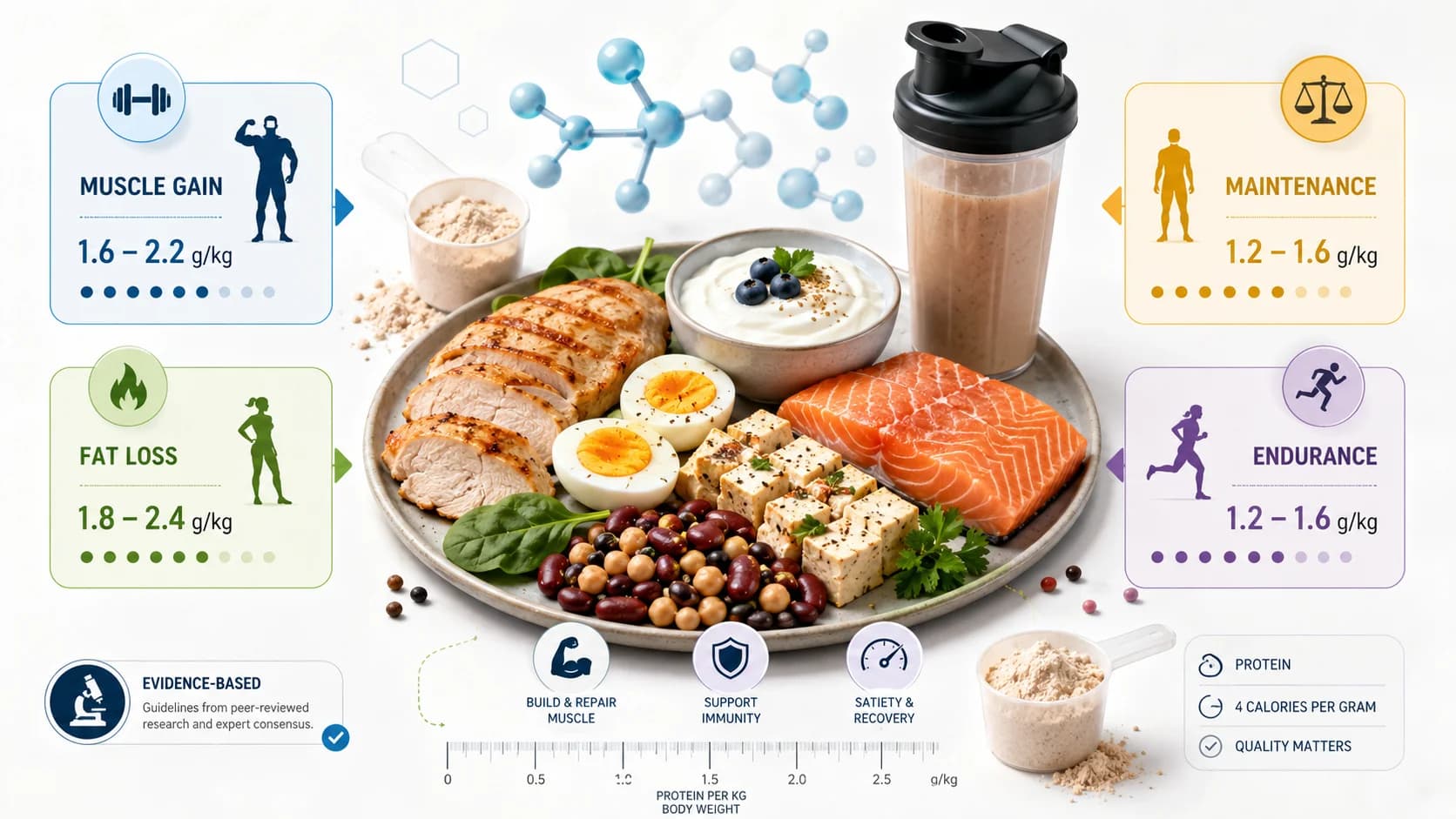
Modern research consistently shows that active adults benefit from significantly more protein. A landmark 2018 meta-analysis in the British Journal of Sports Medicine found that protein intakes up to 0.73g/lb (1.6g/kg) produced measurable increases in muscle mass and strength when combined with resistance training.
Protein Recommendations by Goal
General Health (Sedentary Adults)
Target: 0.36–0.5g per pound of body weight
For a 150-lb person: 54–75g protein/day.
This range prevents deficiency and supports basic tissue repair. If you're not exercising regularly, this is adequate — but most people benefit from aiming toward the higher end.
Weight Loss / Fat Loss
Target: 0.7–1.0g per pound of body weight
For a 175-lb person: 123–175g protein/day.
High protein during a caloric deficit is critical for three reasons:
- Muscle preservation: Without adequate protein, up to 25% of weight lost can be muscle mass. High protein reduces this to under 10%.
- Satiety: Protein is the most satiating macronutrient. Studies show high-protein diets reduce hunger and spontaneous calorie intake by 200-400 calories/day.
- Thermic effect: 20-35% of protein calories are burned during digestion (vs. 5-15% for carbs and 0-5% for fat).
Muscle Building / Strength Training
Target: 0.7–1.0g per pound of body weight
For a 180-lb person: 126–180g protein/day.
The 2017 systematic review by Schoenfeld and Aragon found no additional benefit beyond 0.73g/lb (1.6g/kg) for muscle building. However, going up to 1.0g/lb (2.2g/kg) is safe and provides a margin of error for higher-activity individuals.
Endurance Athletes
Target: 0.5–0.7g per pound of body weight
For a 160-lb runner: 80–112g/day.
Endurance athletes need more protein than sedentary people (for tissue repair from sustained training) but less than strength athletes (less muscle breakdown).
Older Adults (65+)
Target: 0.5–0.7g per pound of body weight
Aging reduces the body's protein synthesis efficiency (called anabolic resistance). Older adults need more protein per meal to trigger muscle protein synthesis — at least 25-40g per meal versus 20-25g for younger adults.
How to Hit Your Protein Target
High-Protein Foods (grams per serving)
- Chicken breast (6 oz): 54g protein, 280 calories
- Greek yogurt (1 cup): 20g protein, 130 calories
- Eggs (3 large): 18g protein, 210 calories
- Salmon (6 oz): 40g protein, 350 calories
- Lentils (1 cup cooked): 18g protein, 230 calories
- Cottage cheese (1 cup): 28g protein, 220 calories
- Whey protein shake: 25-30g protein, 120-150 calories
- Tofu (½ block): 20g protein, 180 calories
- Ground turkey (6 oz): 42g protein, 340 calories
- Tuna (1 can): 30g protein, 140 calories
Sample 150g Protein Day
- Breakfast: 3 eggs + Greek yogurt = 38g
- Lunch: 6oz chicken breast + quinoa = 60g
- Snack: Protein shake + almonds = 32g
- Dinner: 6oz salmon + vegetables = 42g
- Total: 172g protein ✓
Protein Timing: Does It Matter?
The "anabolic window" myth — that you must consume protein within 30 minutes of training — has been largely debunked. What matters more is total daily intake and distribution.
Evidence does support:
- 3-5 protein feedings per day (spread throughout the day, not all in one meal)
- 20-40g per meal for optimal muscle protein synthesis per feeding
- Pre-sleep protein: 30-40g of casein before bed may improve overnight recovery
Common Protein Myths Debunked
"Too much protein damages kidneys." In healthy individuals, no evidence supports this up to 1.5g/lb. People with pre-existing kidney disease should consult a doctor, but for healthy kidneys, high protein is safe.
"Plant protein is incomplete." While most plant proteins are lower in certain amino acids, eating a variety of plant sources throughout the day provides all essential amino acids. You don't need to combine proteins in a single meal.
"Protein makes you bulky." Protein alone doesn't cause bulking. Building significant muscle requires progressive resistance training plus a caloric surplus over months/years. Protein without the training stimulus is used for repair and satiety.
Calculate Your Protein Needs
Use our free Protein Calculator for personalized recommendations based on your weight, goals, and activity level. Check your complete daily calorie needs with our TDEE Calculator, or plan your full macro split with our BMI Calculator to understand your baseline body composition.
Frequently Asked Questions
How much protein do I need per day?
For active adults: 0.7–1.0g per pound of body weight. For sedentary adults: 0.36–0.5g/lb. For weight loss with muscle preservation: aim for 0.8–1.0g/lb.
Can I eat too much protein?
For healthy individuals, intakes up to 1.5g per pound are safe. Excess protein is used for energy or excreted — it doesn't "turn into fat" simply because you ate more than needed. Hydration is important at higher intakes.
What's the best source of protein?
There's no single "best" source. Animal proteins (chicken, fish, eggs, dairy) have complete amino acid profiles and high bioavailability. Plant proteins (legumes, tofu, tempeh) are excellent but should be varied for complete amino acid coverage.
Do I need protein supplements?
Not if you can meet your target through whole foods. Supplements (whey, casein, plant-based protein powder) are convenient tools for hitting daily targets, not necessities. Whole food sources provide additional micronutrients.
How much protein per meal can your body absorb?
Your body can absorb virtually unlimited protein — it just takes longer. For maximal muscle protein synthesis per feeding, research suggests 20-40g is the sweet spot. Beyond that, protein is still absorbed and used for energy and other functions, but the muscle-building signal plateaus.
Related Articles on CalculatorApp.me
- TDEE Explained: Total Daily Energy Expenditure
- How to Calculate Your Daily Calorie Needs
- How Many Calories Do You Need? TDEE and BMR
- BMI vs. Body Fat Percentage Comparison
Protein & Nutrition Science Resources
Related Calculators
Try these free calculators related to this article:
In-Depth Guides
Dive deeper with our comprehensive guides on this topic:
Frequently Asked Questions
Our Methodology
All health content on CalculatorApp.me is reviewed by subject-matter experts, cross-referenced with official sources, and updated regularly for accuracy. Our formulas and data are verified against industry standards and government publications.
Jordan Hayes
Verified AuthorPersonal Finance Content Strategist
Jordan is a personal finance content strategist with 9+ years writing about mortgages, retirement, tax strategy, and budgeting. Every guide is cross-referenced with IRS publications, Federal Reserve data, and CFPB guidance to make complex calculations accessible. Editor at CalculatorApp.me.
Found this helpful? Share it!
Stay Updated
Get notified when we launch new calculators and features.
No spam. Unsubscribe anytime.