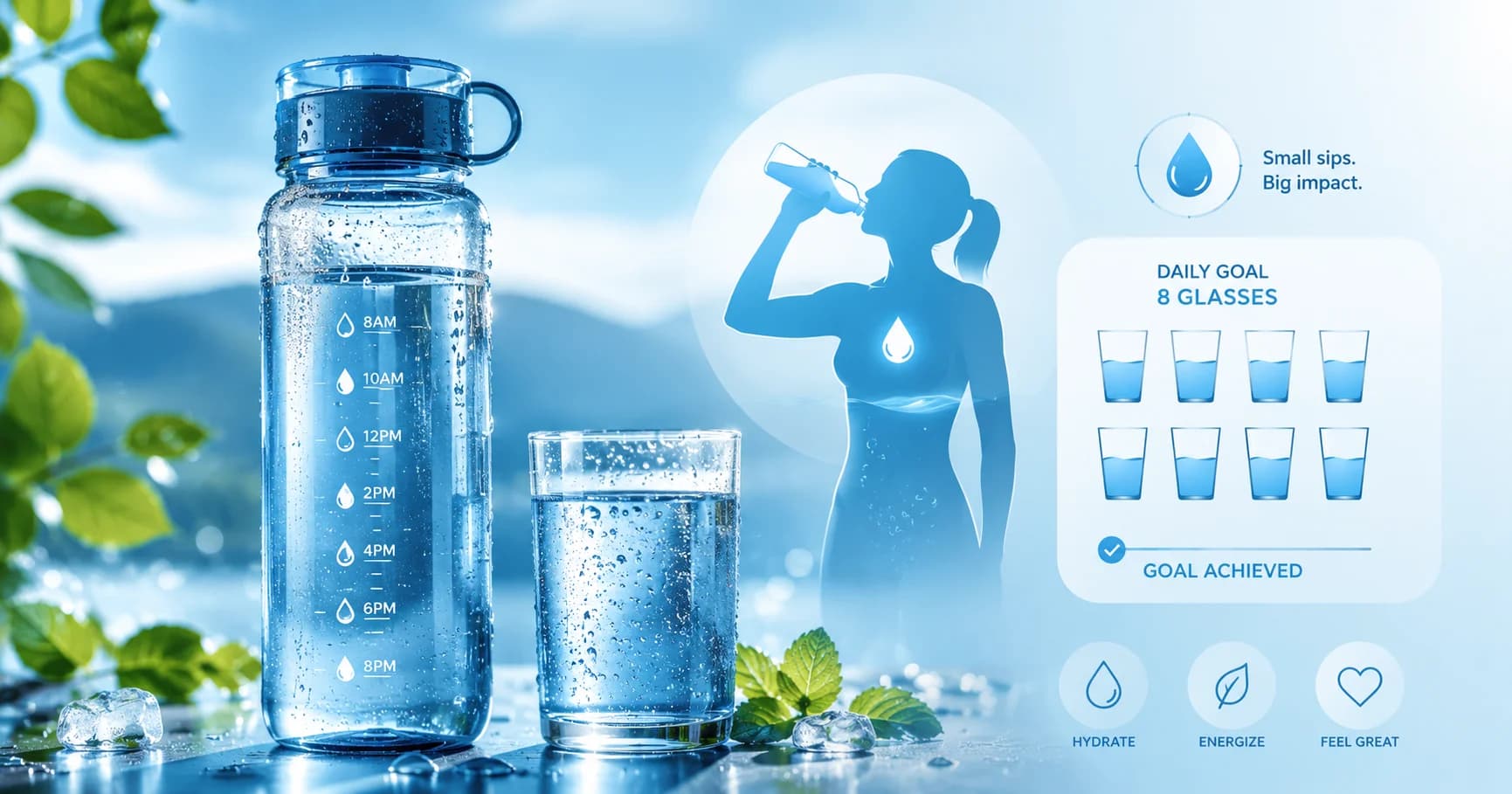
Water Intake Calculator: How Much Water Do You Actually Need Each Day?
Free Calculator
BMI Calculator
Table of Contents
The "8 Glasses a Day" Myth — and What the Research Actually Says
The recommendation to drink 8 glasses (about 2 litres) of water per day is one of the most widely repeated health guidelines — and one of the least supported by evidence. A 2002 review in the American Journal of Physiology by Heinz Valtin found no scientific basis for this figure and noted it likely originated from a 1945 US Food and Nutrition Board recommendation that most people misread: it recommended 2.5 litres per day, but specified that "most of this quantity is contained in prepared foods."
Your actual daily water requirement is highly individual. It depends on your body weight, physical activity, climate, dietary water content, and health status. Use our Water Intake Calculator to find your personalised target.
How to Calculate Your Daily Water Intake
The most evidence-backed formula for baseline water needs is weight-based:
Daily water (ml) = Body weight (kg) × 30–35 ml
This gives you the range for a sedentary person in a temperate climate. Adjust upward for activity and heat:
| Factor | Additional Water |
|---|---|
| 30–60 min exercise | +350–500 ml (12–17 oz) |
| 60–90 min exercise | +500–750 ml (17–25 oz) |
| 90+ min exercise or heavy sweating | +750–1,000 ml + electrolytes |
| Hot/humid climate (over 30°C) | +500–1,000 ml |
| Pregnancy | +300 ml above baseline |
| Breastfeeding | +700–1,000 ml above baseline |
| High-protein diet | +200–400 ml (kidneys need more water to process protein) |
Worked Example: 70 kg Person, Moderately Active
Baseline: 70 kg × 33 ml = 2,310 ml (2.3 litres)
Add for 45-min gym session: +400 ml
Add for warm climate (25°C): +300 ml
Total daily target: ≈ 3,010 ml (about 3 litres / 10 cups)
This is meaningfully different from the generic "8 glasses" recommendation — and this person would be chronically underhydrated following that advice.
Does All Fluid Count, or Just Water?
All beverages contribute to your daily fluid intake — including tea, coffee, milk, juice, and even caffeinated drinks. The old claim that caffeine is dehydrating enough to negate fluid intake has been disproven: moderate caffeine intake (up to 400 mg/day, equivalent to about 4 cups of coffee) does not cause net fluid loss in habituated drinkers.
What counts toward daily fluid intake: water, tea, coffee, milk, juice, smoothies, soup broth, sparkling water
What should mostly be water: at least 60–70% of your target, to avoid excess sugar, caffeine, or sodium from other beverages
What does NOT count: alcohol is a net diuretic — it causes more fluid loss than it contributes. For every standard drink, you need an extra 150–200 ml of water to compensate.
How Much Water Do You Get From Food?
On a typical Western diet, approximately 20–30% of daily water intake comes from food. On a diet rich in fruits and vegetables, this rises to 30–40%.
| Food | Water Content |
|---|---|
| Cucumber, lettuce, celery | 95–97% |
| Watermelon, strawberries, tomatoes | 90–92% |
| Oranges, grapefruit | 86–88% |
| Apple, pear | 84–86% |
| Cooked oatmeal | 84% |
| Cooked chicken breast | 65% |
| Bread | 37% |
| Nuts and seeds | 2–5% |
If you eat a diet high in whole fruits and vegetables, your calculated water target from drinks can be reduced by approximately 400–600 ml per day.
Signs You Are Not Drinking Enough Water
Thirst is a lagging indicator — by the time you feel thirsty, you are already mildly dehydrated (roughly 1–2% of body mass in fluid loss). Watch for these earlier signs:
- Urine colour: Pale yellow (like lemonade) is the target. Dark yellow or amber means drink more. Clear urine can indicate overhydration.
- Frequency: Urinating fewer than 4–6 times per day suggests inadequate intake
- Headaches: Often caused by mild dehydration, especially in the afternoon
- Concentration problems: Even 1–2% dehydration impairs cognitive performance
- Dry mouth or cracked lips: Late signs of dehydration
- Fatigue: Blood becomes more viscous when dehydrated, reducing oxygen delivery to muscles
Can You Drink Too Much Water?
Yes — though rare in healthy adults not doing extreme endurance exercise. Hyponatraemia (dangerously low blood sodium from overhydration) is a real risk for endurance athletes who drink excessive plain water during long events.
For the average person, drinking significantly above your calculated target (more than 4–5 litres for a 70 kg person) is unnecessary and can cause discomfort. Your kidneys can process about 0.8–1.0 litres per hour, so spreading intake throughout the day is always better than drinking large volumes at once.
Water Intake for Weight Loss: Does It Help?
Research supports a modest but real effect of water intake on weight management:
- Drinking 500 ml of water 30 minutes before a meal reduces calorie intake by approximately 13% in one controlled study
- Substituting water for caloric beverages (juice, soda) directly reduces calorie intake
- Adequate hydration supports efficient fat metabolism in the liver and kidneys
- Dehydration is often mistaken for hunger — staying hydrated can reduce unnecessary snacking
Combine proper hydration with your calorie deficit plan and TDEE calculation for the complete weight management picture.
Related Health Calculators
- Water Intake Calculator — Your personalised daily water target
- TDEE Calculator — Your total daily calorie burn
- BMI Calculator — Body mass index
- Calorie Deficit Calculator — Set your weight loss calorie target
Related Calculators
Try these free calculators related to this article:
In-Depth Guides
Dive deeper with our comprehensive guides on this topic:
Frequently Asked Questions
Our Methodology
All health content on CalculatorApp.me is reviewed by subject-matter experts, cross-referenced with official sources, and updated regularly for accuracy. Our formulas and data are verified against industry standards and government publications.
Jordan Hayes
Verified AuthorPersonal Finance Content Strategist
Jordan is a personal finance content strategist with 9+ years writing about mortgages, retirement, tax strategy, and budgeting. Every guide is cross-referenced with IRS publications, Federal Reserve data, and CFPB guidance to make complex calculations accessible. Editor at CalculatorApp.me.
Found this helpful? Share it!
Stay Updated
Get notified when we launch new calculators and features.
No spam. Unsubscribe anytime.